UX DESIGN PROCESS
How a UX Design Process Turns Ideas into Intuitive Software
Ever wondered how your favorite software goes from a rough idea to a seamless, user-friendly experience? Let’s take a peek behind the curtain at the UX design process—a journey that’s as much about understanding people as it is about pixels and code.
Step 1: Meet the Personas—Who Are We Designing For?
Before a single sketch is made, the team starts by identifying the personas. These are the real people who will use the software, each with their own goals, frustrations, and habits. By interviewing stakeholders and end users, designers build a clear picture of who’s at the heart of the project. This step sets the tone for everything that follows, ensuring the design is grounded in real-world needs.

Step 2: Understanding Tasks—What Do Users Need to Accomplish?
Next, it’s time to dig into the details. What are the key tasks users need to complete? Through research, surveys, and workshops, the team uncovers the workflows and pain points that matter most. This isn’t just about making things look good—it’s about making sure every click and interaction helps users get things done efficiently.
“Adaptive and responsive design is no longer a nice to have; it’s a requirement.” — Dr. Elizabeth Gerber, co-director of the Center for Human-Computer Interaction + Design at Northwestern University
Today, people are looking to do more with less. Whether it’s an app or a product, if it doesn’t adapt to a user’s needs, they’ll be quick to switch to other options. As a result, having an adaptive design has become a must for businesses. It’s not a “nice extra” anymore.
As you expand your stories of use with greater detail, you’re describing how you expect your solution to work. These expanded stories show how people interact with your interface's objects, what details (attributes) they care about, and the actions (operations) they expect to take.
For example, a story like “Chelsea updates her credit card expiry date” points directly to a credit card object, its expiry attribute, and an update operation. Along the way, you may need to add these components to your conceptual model if they're not already present.
This approach helps you avoid assumptions, resist feature creep, and focus on what matters most to your primary personas. By practicing it, you build better models and better products: coherent, usable, and meaningful solutions to the people you’re designing for.
Step 3: Mapping the Journey—From Frustration to Flow
With personas and tasks in hand, designers create journey maps. These visual stories chart the user’s path through the software, highlighting moments of delight and potential roadblocks. Journey mapping helps the team spot opportunities to simplify, streamline, and surprise users with thoughtful touches.
The redesign of the IBCS software marked a significant turning point in the perception and acceptance of the need for user experience design among development teams and the warfighter.
Prior to this lesson, there may have been skepticism, hesitation, or even resistance towards the user design process. We changed the attitudes and a well-implemented, designed and research process.
IBCS gained recognition and was widely requested within the military community as an example of well-designed digital innovation.
Step 4: User Flows—Designing the Pathways
Now, the team sketches out user flows—step-by-step diagrams showing how users move through the software to achieve their goals. These flows are the backbone of the design, guiding everything from navigation menus to button placement. The goal? Make every step feel natural and intuitive.
Step 5: Research and Reality—What’s Working Now?
Before jumping into new designs, it’s crucial to understand the current software functionality. Through usability reviews and data analysis, the team identifies what’s working, what’s not, and where improvements are needed. This research ensures that the new design builds on strengths and addresses weaknesses
“Like art, design must function by filling a need and provide value to the person using it. A design that isn’t useful is a design that has failed.” —, product design manager at WhatsApp
Step 6: Prototyping—Bringing Ideas to Life
Armed with insights, designers move to prototyping. Wireframes and clickable models let users and stakeholders test-drive new concepts before a single line of code is written. Feedback is gathered, tweaks are made, and the design evolves in real time.
Step 7: In-Progress Design Reviews—Keeping Everyone Aligned
Throughout the process, regular design reviews bring the team together. Stakeholders, engineers, and users weigh in, ensuring the design stays true to its goals. These check-ins are a chance to catch issues early and celebrate progress.
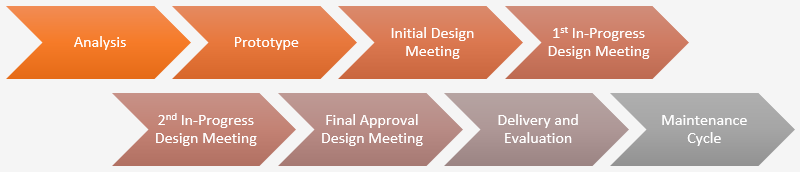
Step 8: Final Design Meeting—Ready for Launch
At last, the final design meeting arrives. The team presents the polished product, walking through user flows, accessibility checks, and usability assessments. With everyone on board, the design is approved and handed off for development.
User experience designers often struggle to clearly define their roles, as they are expected to take on many responsibilities in a rapidly evolving technological landscape. With AI increasingly shaping the design field, it’s crucial for UX professionals to champion user needs and understand the psychology behind how people interact with software. Our dedicated efforts have successfully shifted perceptions of UX design, establishing processes that now serve as the foundation for future initiatives and set a new standard for design excellence.
Often, UX designers are expected to follow the directions of systems engineers, but this approach can undermine the integrity of the human experience. Unlike systems engineering, which employs a systematic focus, UX design must prioritize a humanistic perspective. By centering on the user's needs rather than mere system requirements, we can develop solutions that resonate and provide meaningful experiences.
A fully developed UX process is more than a checklist—it’s a collaborative adventure that transforms software from functional to fantastic. By focusing on real users, understanding their journeys, and refining every detail, teams deliver products that people love to use, day after day